
A friendly thumbs-up — you've got this.

gk's fuji guide

Everything you need to fall in love with the X100VI.

A short, opinionated primer for the iPhone shooter making the jump to a real camera made by NJ.

scroll

Start Here

This camera is going to feel weird at first — slower, fussier, full of dials that do nothing your phone ever asked you to think about. That friction is the whole point. Treat it like a new kitchen: learn the tools, then forget them. What follows is the cheat sheet.

Why this isn't your iPhone

Your phone made the decisions. HDR, exposure, color, focus — all handled before you even tapped the shutter.

The X100VI hands those decisions back to you. It's slower on purpose.

The camera doesn't take better photos than your iPhone.

It takes yours.

A grainy editorial frame as a breather between sections.

The Three Dials

Aperture, shutter, ISO.

Drag the slider. Same photo, different setting. Watch what changes.

Aperture

How wide the lens opens. Wide (f/2) blurs the background, like a shallow depth-of-field food shot. Narrow (f/8) keeps everything sharp, like a flat-lay.

f/8 — all sharpf/2 — background melts
Aperture base comparison sceneAperture adjusted comparison scene

← Drag to compare →

You already do this with your phone's Portrait Mode. Now you control it.

Shutter Speed

How long the lens stays open. Fast (1/1000s) freezes — kids running, oil splashing in a pan. Slow (1/15s) blurs — car lights, steam rising off soup.

1/1000s — frozen1/15s — motion
Shutter Speed base comparison sceneShutter Speed adjusted comparison scene

← Drag to compare →

Think of it like heat: high and quick, or low and lingering.

ISO

How sensitive the camera is to light. Low (200) is clean and crisp. High (12800) is grainy and moody. Higher ISO = more grain = more 'film' vibe — sometimes you want that.

ISO 200 — cleanISO 12800 — grainy
ISO base comparison sceneISO adjusted comparison scene

← Drag to compare →

Grain isn't a flaw. It's seasoning.

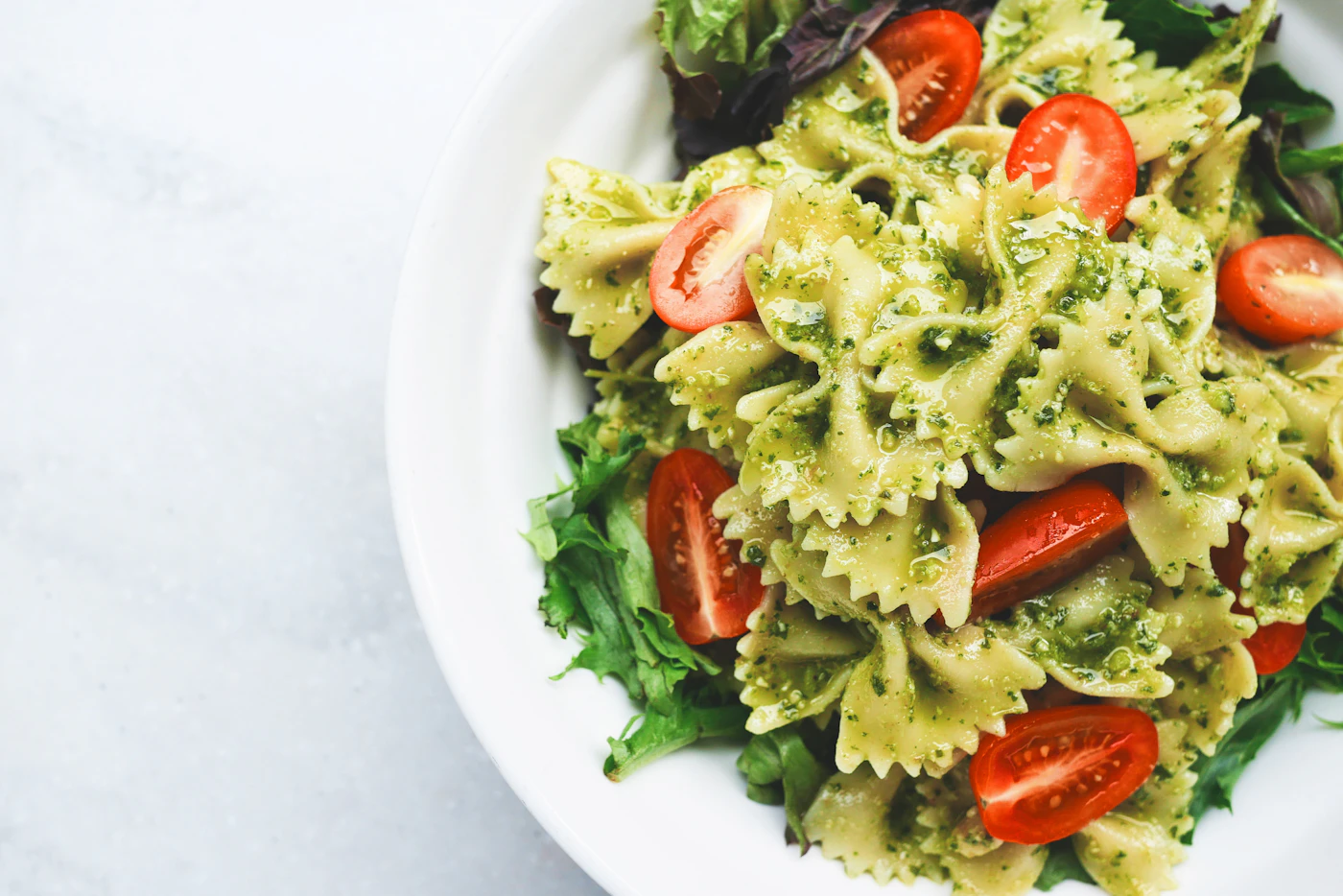
Food on a wooden table, soft window light — the kind of frame Portra 400 was made for.

Defaults

Set this up once.

Load these before you leave the house. Then forget them.

  1. 01
    Image Quality FINE+RAW

    JPEGs for instant use, RAW as a safety net

  2. 02
    Drive Mode CH (continuous high burst)

    catch the moment between moments

  3. 03
    Autofocus Zone (medium)

    fast enough for life, precise enough for plates

  4. 04
    Face/Eye Detection ON

    it just works

  5. 05
    ISO Auto (base 125, max 6400, min shutter 1/125)

    camera handles light so you don't have to think

  6. 06
    Viewfinder lever Hybrid (OVF with EVF preview)

    see the real world and the photo

  7. 07
    Front lever (Fn1) ND Filter

    for harsh midday sun, this is your sunglasses

  8. 08
    Top Fn button Film Simulation

    swap recipes in one tap

  9. 09
    Q Menu Film Sim, WB, DR, Highlight, Shadow, Grain, Clarity

    everything you need, nothing you don't

  10. 10
    Image Review 1.5 seconds

    glance, don't chimp

Recipes

Six recipes, ready to load.

Copy these into Custom Settings (C1–C7) and you'll basically never need to edit a photo again.

No. 01Reala Ace

Reala Ace Everyday

your daily driver

Best forAnything, anytime. Start here.

Film Simulation
Reala Ace
Dynamic Range
DR200
Grain Effect
Weak, Small
Color Chrome Effect
Strong
Color Chrome FX Blue
Off
White Balance
Auto, +1 Red & -2 Blue
Highlight
-1
Shadow
-1
Color
+4
Sharpness
-1
High ISO NR
-4
Clarity
-2
ISO
Auto, max 6400
Exposure Comp
0 to +2/3
No. 02Classic Negative

Classic Negative

Fujicolor 100 Gold · street + travel

Best forStreets, markets, overcast days, anything cinematic.

Film Simulation
Classic Negative
Dynamic Range
DR400
Highlight
-2
Shadow
+1
Color
+3
Noise Reduction
-4
Sharpness
-2
Clarity
-2
Grain Effect
Strong, Small
Color Chrome Effect
Off
Color Chrome FX Blue
Off
White Balance
Daylight, +4 Red & -5 Blue
ISO
Auto, max 6400
Exposure Comp
+2/3 to +1 1/3
No. 03Classic Chrome

Kodak Portra 400

food + portrait

Best forPlated food, skin tones, soft window light, golden hour.

Film Simulation
Classic Chrome
Dynamic Range
DR400
Grain Effect
Weak, Small
Color Chrome Effect
Strong
Color Chrome FX Blue
Off
White Balance
Auto, +2 Red & -4 Blue
Highlight
-2
Shadow
-1
Color
+2
Sharpness
-1
High ISO NR
-4
Clarity
-2
ISO
Auto, max 6400
Exposure Comp
+1/3 to +2/3
No. 04Nostalgic Neg.

Nostalgic Negative

Americana · golden hour

Best forSunsets, warm restaurants, late afternoon light.

Film Simulation
Nostalgic Neg.
Dynamic Range
DR400
Grain Effect
Strong, Small
Color Chrome Effect
Strong
Color Chrome FX Blue
Strong
White Balance
Auto, +2 Red & -5 Blue
Highlight
-1
Shadow
-1
Color
+2
Sharpness
0
High ISO NR
-4
Clarity
0
ISO
Auto, max 6400
Exposure Comp
0 to +1/3
No. 05Acros +Y

Kodak Tri-X 400

your black & white

Best forStreets, harsh light, moody indoor moments.

Film Simulation
Acros +Y
Dynamic Range
DR400
Grain Effect
Strong, Large
Color Chrome Effect
Strong
Color Chrome FX Blue
Off
White Balance
Auto, 0 Red & 0 Blue
Highlight
+1
Shadow
+2
Sharpness
0
High ISO NR
-4
Clarity
+3
ISO
Auto, max 12800
Exposure Comp
0 to +1/3
No. 06Pro Neg. Std (use Reala Ace if available)

Pro Negative 160C

Soft Daylight · pretty but real

Best forMarkets, flat lays, daytime portraits, anything where colors should look true but pretty.

Film Simulation
Pro Neg. Std (or Reala Ace)
Dynamic Range
DR200
Grain Effect
Weak, Small
Color Chrome Effect
Strong
Color Chrome FX Blue
Weak
White Balance
Auto, +1 Red & -2 Blue
Highlight
-1
Shadow
0
Color
+2
Sharpness
-1
High ISO NR
-4
Clarity
-2
ISO
Auto, max 6400
Exposure Comp
0 to +1/3

All recipes credit: Fuji X Weekly, Film Recipes, and the global Fujifilm community. Want more? fujixweekly.com.

Little Tricks

Things the manual buries.

Things the manual buries but you’ll use every single day.

Push the rear dial to swap recipes.

Skip the Q menu entirely. Press the rear command dial straight in and a C1-C7 list pops up — spin to switch, click to select. One second, one finger, eyes still in the viewfinder.

Disable Auto Update Custom Setting.

Otherwise the camera silently overwrites your saved recipes whenever you tweak something on the fly. Menu → IQ → toggle off. Do this on day one or lose your recipes within a week.

Boost Mode, always on.

The default Normal is secretly battery-saver mode — slower viewfinder, slower autofocus, sluggish feel. Boost wakes the camera up. Power Management → Performance → Boost. Carry a spare battery; worth it.

OVF for streets, EVF for food.

Flick the front lever forward for optical: see the real world, react fast, frame around what’s coming. Pull it back for electronic: see exactly what the photo will look like, recipe applied. Different tools, same camera.

The leaf shutter is silent.

No click, no mirror slap. People genuinely forget you’re shooting. Quiet restaurants, candid family, sleeping pets — the X100VI hides better than a phone does, because a phone screen still glows.

AF-S → Focus priority. AF-C → Release priority.

Single-shot autofocus should refuse to fire unless sharp. Continuous autofocus should fire no matter what. Don’t miss the moment for the sake of perfect focus.

The lens is sharpest at f/4 to f/5.6.

f/2 is dreamy but soft at the edges and corners. For tack-sharp food, products, or portraits, stop down a touch. For mood and bokeh, open it back up.

Exposure compensation is the dial you’ll touch most.

Top-right of the camera. The X100VI’s meter runs slightly dark by default — nudging +1/3 to +2/3 makes most scenes glow. This single dial is the difference between flat photos and flattering ones.

Turn off Digital Teleconverter.

It’s a crop pretending to be zoom — drops resolution and image quality. Easy to switch on by accident. Disable it in the menu and forget it exists.

Get the Fujifilm XApp.

Transfers JPEGs to your phone in seconds over Bluetooth. Set it up once, then never AirDrop yourself a photo from a memory card again. It also lets you control the camera remotely for self-portraits and tripod food shots.

Spend a week with these and the camera starts to feel like an extension of your hand.

How to Shoot

Three situations.

Dial in

Aperture priority, f/5.6, ISO Auto (max 6400), min shutter 1/250, Zone AF.

Load this

Classic Negative.

One tip

Pre-focus at 3 meters and shoot from the hip. Don't raise the camera to your eye — you'll spook the moment. Walk slow, shoot fast.